Origins
From fairground devices to public play cabinets
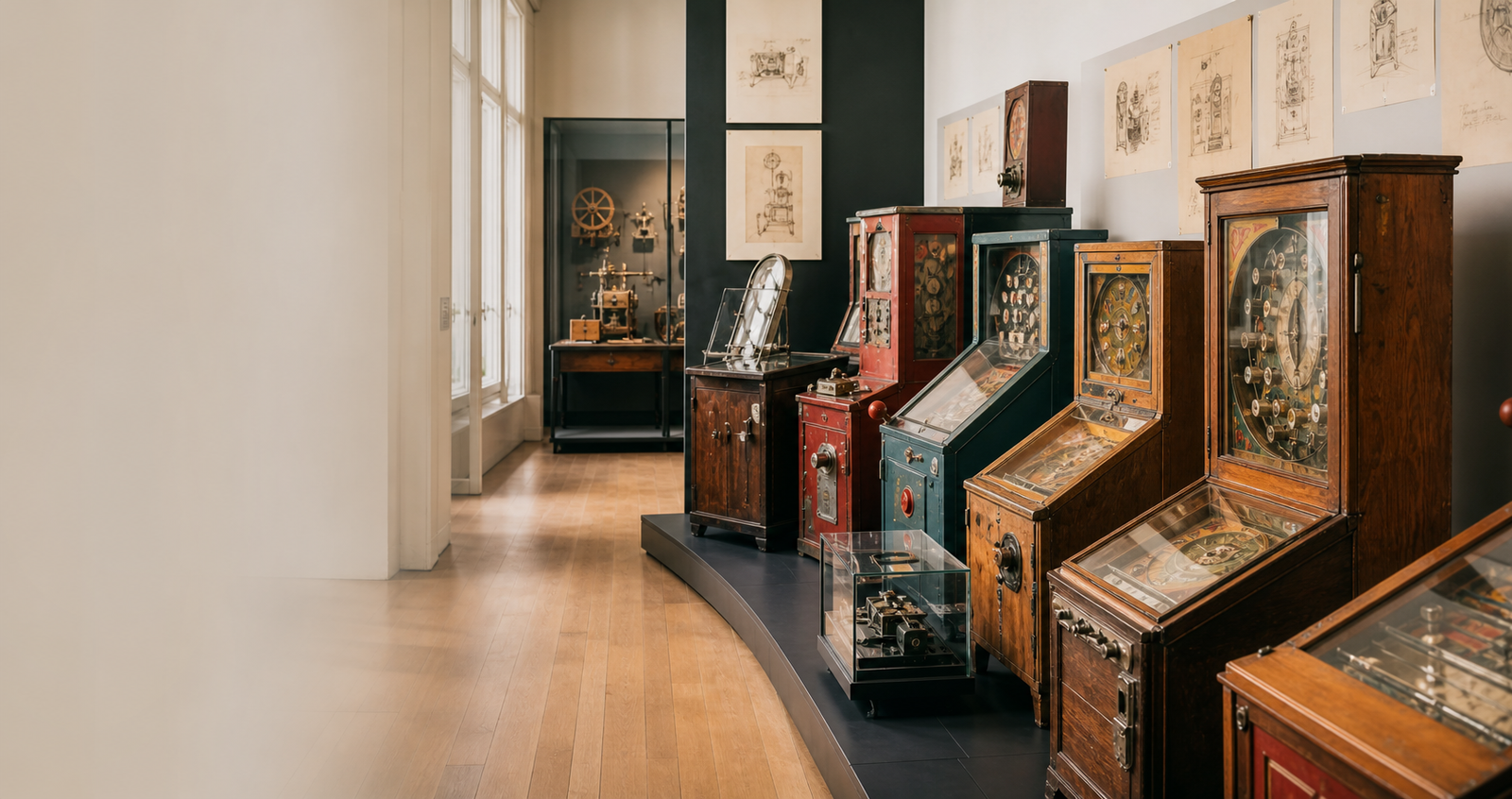
Mechanical amusement machines appeared alongside fairs, seaside arcades, railway stations, hotel lobbies, and small entertainment halls. Their early appeal was not only the result of chance or spectacle. People were drawn to the movement of gears, the tactile sound of buttons, the cabinet artwork, and the short pause these objects created in busy public places.
As these machines moved into dedicated play rooms, their design became more intentional. Builders experimented with cabinet height, viewing windows, handles, lights, sound, and scoring displays. The machine became both an object to operate and a small stage for mechanical theatre.
The lasting story of amusement machines is not only about outcomes. It is also about cabinet design, public space, sound, rhythm, and the way simple controls shaped modern screen culture.
Mechanics
Why cabinets, buttons, and reels mattered
Before home screens became ordinary, public machines had to explain themselves through physical design. A handle suggested motion. A bright button invited one clear action. A window showed the machine's inner logic. Labels, lights, and sound cues helped visitors understand what had changed after each interaction.
Timeline
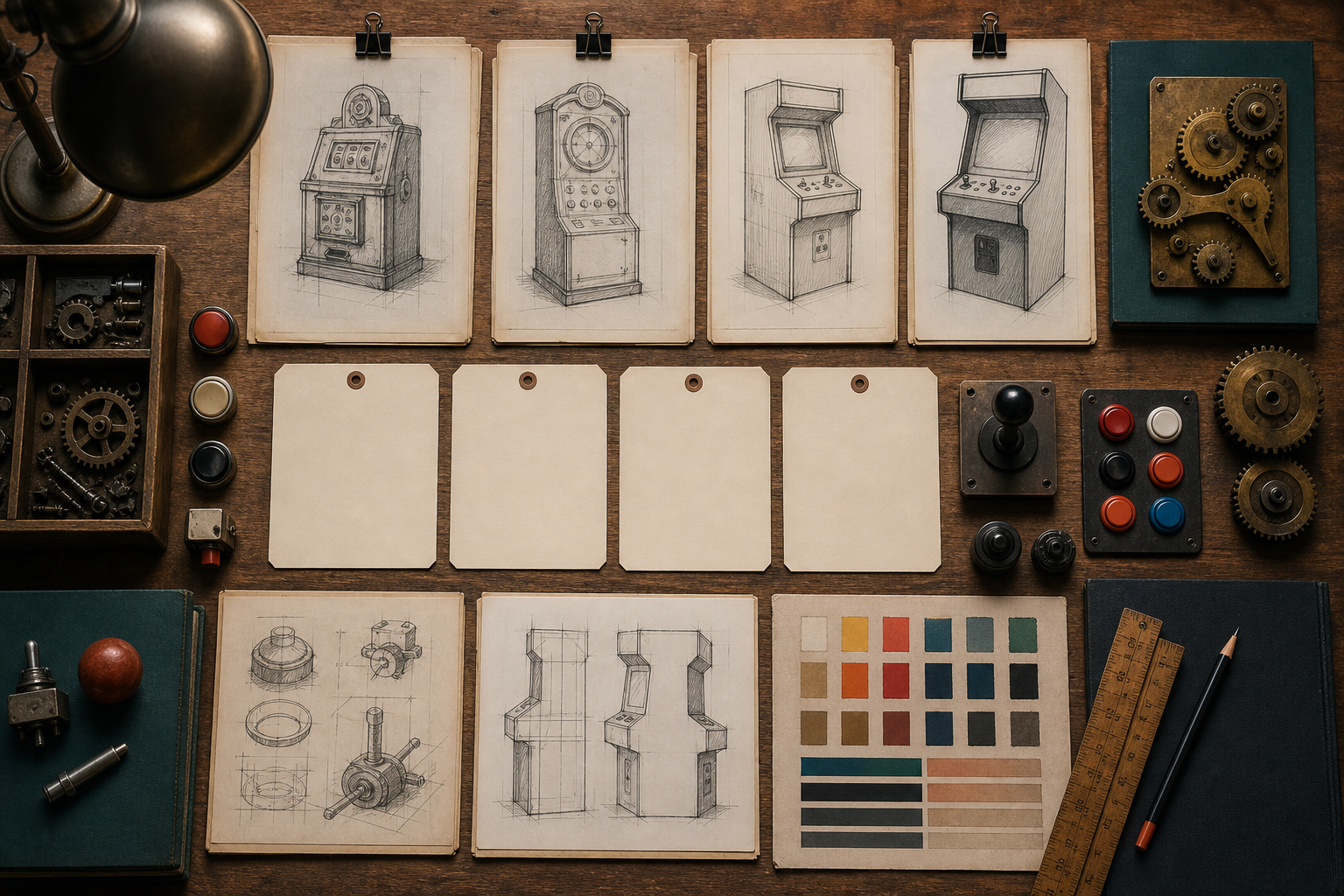
A short design timeline
Mechanical novelty
Early devices used visible movement, springs, gears, levers, bells, and painted panels.
Cabinet identity
Manufacturers began treating the cabinet as a recognizable object with color and shape.
Shared play rooms
Machines gathered in arcades, boardwalk rooms, cafes, clubs, and other social interiors.
Electronic interfaces
Buttons, screens, audio cues, and scoring displays became the language of arcade design.
Culture
Why the format remained recognizable
The cabinet format survived because it combined several simple ideas: a visible object, a small set of controls, a short session, and immediate feedback. Later digital games borrowed many of these habits. Menus, start buttons, progress sounds, and animated rewards all have roots in the physical language of public amusement machines.
This article treats that history as design culture. It avoids commercial recommendations, brand comparisons, and instructions for participation in commercial play services.
What is not included on this site
- No sign-up forms, checkout paths, member areas, lead collection, or personal data submission.
- No marketing codes, reward claims, ranking tables, or outcome promises.
- No outside interactive links, file access, app packages, partner links, or automatic forwarding.